

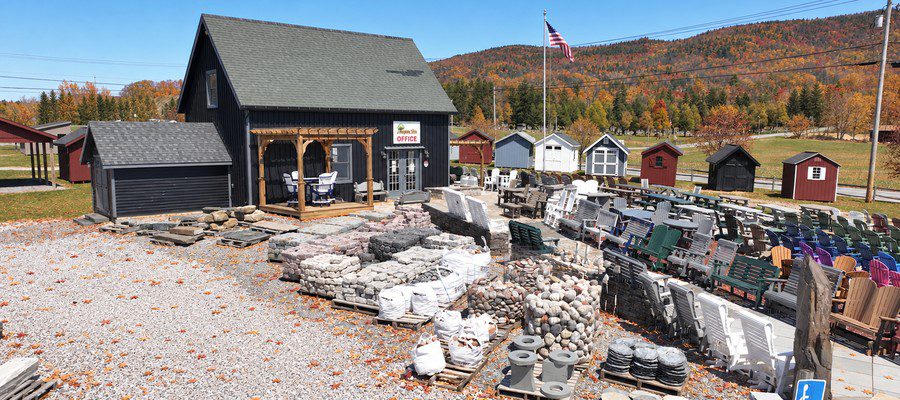
Vermont doesn’t ease into winter. One week you’re watching the maples turn on the ridge, and the next a nor’easter is testing every surface, structure, and drainage line on your property. The gap between those two weeks, that narrow, brilliant corridor of October light, is when the real preparation happens.
At Livingston Farm, we’ve been helping Vermont homeowners build, stone, and landscape their way through all four seasons for years. This checklist distills what we tell every customer who asks: What should I actually be doing this fall? Whether your property has a quarter acre or twenty, the priorities are the same.
Check Drainage and Grading Before the Ground Freezes
Water that can’t drain becomes ice that cracks foundations, buckles walkways, and turns low spots into small ponds come April. Walk your property after a hard rain in late September and note where water pools longer than 30 minutes. Any grading that directs water toward your home’s foundation, a retaining wall, or a stone structure needs to be corrected before frost sets in.
Drainage ditches and culverts should be cleared of summer leaf debris now; a blocked culvert under a driveway can cause serious erosion in a single heavy rain event, something Vermont’s fall weather is well-equipped to deliver.
Vermont Tip
Frost depth in central and northern Vermont regularly reaches 48–60 inches. Any drainage correction requiring digging should be finished by mid-October in most years. After that, you’re working against the clock.
Clean and Inspect Your Stone Patios and Walkways
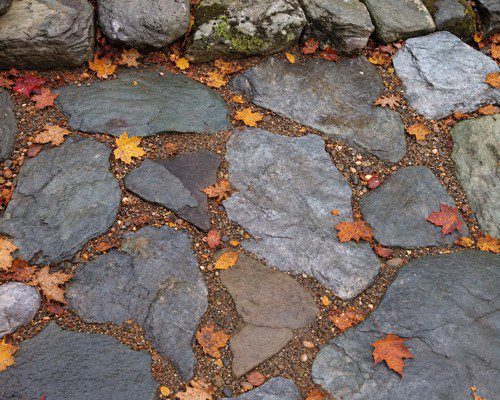
Natural stone is one of the most durable hardscape materials available, but it rewards a little attention before winter. Sweep off leaf debris, which holds moisture against the stone and accelerates staining. Inspect mortar joints on any dry-stacked or mortared walls for cracks that could admit water, expand when frozen, and become a much larger repair by spring.
For flagstone patios and natural stone walkways, this is also a good time to re-level any shifted pieces. A stone that was slightly sunken in October is a tripping hazard buried under three inches of snow by December and a much harder fix in March mud.
Store or Protect Your Outdoor Furniture the Right Way
Not all outdoor furniture handles a Vermont winter equally. Teak and wood furniture should come indoors or under solid cover to prevent cracking from repeated freeze-thaw cycles. Metal furniture that’s powder-coated can often stay out under a breathable cover, but bare iron or untreated aluminum will rust and pit.
If you’ve been thinking about furniture that’s genuinely built for New England’s climate, fall is the right time to look at poly lumber furniture. Made from recycled high-density polyethylene, it won’t crack, split, splinter, or fade in UV or moisture. You can leave it out year-round without a second thought.
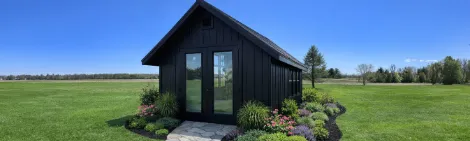
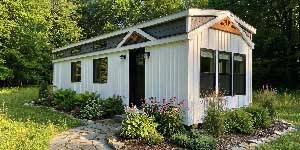
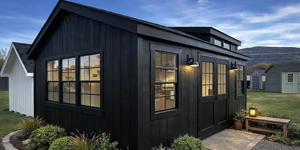
Inspect and Winterize Your Sheds and Outbuildings
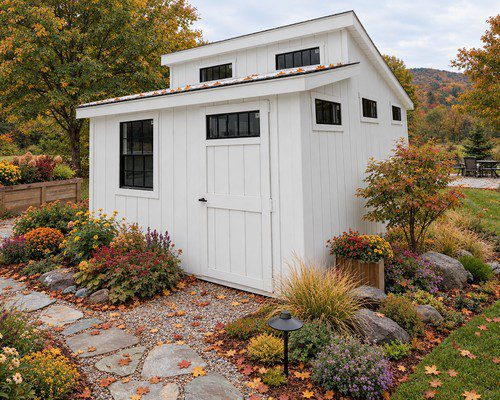
Before snow load becomes a concern, walk the perimeter of every outbuilding on your property. Check the roofline for any sagging or damaged sections, a Vermont winter delivers an average 60–80 inches of snowfall in most parts of the state, and poorly supported roofs fail under the weight. Look for gaps at the sill plate where cold air and pests can enter, and make sure doors and windows close and seal properly.
If your current storage situation has you stacking lawn equipment in an open lean-to or piling tools in a garage corner that’s already cramped, fall is exactly the right time to plan a dedicated outbuilding. Lead times are typically shorter for fall delivery than for spring, and having storage in place before winter means your equipment arrives next season protected and organized.
Cut Back Perennials and Prep Garden Beds
Most Vermont gardeners know the rule: leave native perennial seed heads for overwintering birds through December, then cut back in late winter before new growth emerges. For non-native ornamentals and vegetable beds, a thorough fall cleanup removes disease pressure and gives beds a head start in spring. Remove spent annuals, pull cool-season vegetable remnants, and compost healthy plant material.
If you’re bordering garden beds with natural stone edging, fall is a great opportunity to reset any pieces that have shifted over the growing season and to add edging where summer growth revealed unintended spread.
Vermont Tip
Hostas, daylilies, and most ornamental grasses can be divided in early fall. They’ll establish root systems before the ground freezes and come back stronger the following spring.
Mulch Around Trees and Shrubs Before the Hard Freeze
A 2–3 inch layer of mulch applied at the drip line of trees and shrubs does significant work over a Vermont winter: it moderates soil temperature swings that stress roots, retains moisture during dry stretches, and suppresses competing weeds come spring. Pull mulch back a few inches from the trunk to prevent rot and rodent damage. The common mistake of “volcano mulching” against the bark is one of the leading causes of long-term tree stress.
Newly planted trees and shrubs installed this summer especially benefit from mulching. Their root systems haven’t fully established and are more vulnerable to heaving from repeated freeze-thaw cycles in the shallow soil layer.
Plant Spring Bulbs While the Soil Is Still Workable
October is the prime window for planting tulips, daffodils, allium, and crocus across most of Vermont. They need a sustained cold period to bloom well, and planting before the ground freezes hard gives them time to establish roots in place. A mass planting of naturalized bulbs against a stone wall or along a flagstone path is one of the most rewarding low-maintenance landscape decisions you can make. You plant once and the color returns every April with minimal effort.
When choosing locations, think about where you’ll want color early in the season before trees leaf out. South-facing slopes near stone structures warm up earlier in spring and are often the first places to show color after a Vermont winter.
Vermont Tip
Deer pressure is significant in many Vermont neighborhoods. Daffodils and allium are both deer-resistant; tulips are not. Plan accordingly or use physical protection for tulip beds.
Plan Next Season’s Projects Now Before the Spring Rush
Vermont’s construction and landscaping season is compressed. The window between mud season and the first summer heat runs May through September, and contractors, materials, and delivery slots fill up fast. If you’re considering a stone patio, a new outbuilding, a retaining wall, or any significant landscaping project for next year, the conversations you start in October and November are the ones that put you at the front of the queue.
Livingston Farm works with homeowners through the planning and design phase during the off-season so that when the ground opens up, we’re ready to move. Contact us this fall and we’ll work through your site, your goals, and your timing.
Vermont Fall Task Timeline
September
- Walk the property for drainage issues after rain.
- Clear drainage ditches and culverts.
- Inspect stone walkways and mortar joints.
- Plant cool-season cover crops in vegetable beds.
October
- Plant spring bulbs before the ground hardens.
- Mulch trees and shrubs at the drip line.
- Store or cover outdoor furniture.
- Inspect and seal outbuildings.
- Contact contractors for spring projects.
November
- Complete final leaf cleanup off stone surfaces.
- Cut back non-native perennials.
- Check snow-load capacity on outbuilding roofs.
- Finalize spring landscaping plans.
Ready for a Fall Delivery or Spring Project?
Whether you need a shed delivered before the snow flies, natural stone for a fall landscaping project, or want to plan a major project for next season — we’re here. Stop by our Bristol yard or get in touch to talk through what your property needs.
